.png)
 WhatsApp
Used GPUs vs New Budget GPUs
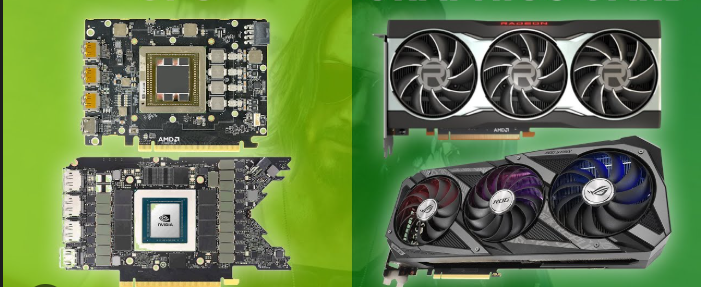
A clear, unbiased comparison of used GPUs vs new budget GPUs, focused on real-world performance, value for money, and smart buying decisions for Indian gamers and creators.
Used GPUs vs New Budget GPUs: Which Performs Better?
Choosing a graphics card today is harder than ever. Prices fluctuate constantly, specifications can be misleading, and marketing often exaggerates real-world performance. For buyers in India—especially gamers, creators, and PC builders on a budget—the biggest dilemma usually comes down to one simple question:
Should you buy a used GPU or a new budget GPU?
At first glance, a brand-new GPU feels like the safer option. It comes sealed in a box, carries manufacturer warranty, and promises peace of mind. But when you look deeper—at actual gaming performance, frame rates, value for money, and long-term usability—the answer is not always that simple.
In many cases, a used GPU can significantly outperform a new budget GPU at the same price. In other situations, a new GPU might make more sense depending on usage, power efficiency, or warranty preferences.
This guide breaks down the debate clearly and honestly—without hype, without bias, and without pushing unnecessary upgrades. The goal is simple: help you choose the GPU that gives you the best real-world performance for your money.
Understanding the GPU Market Today
The GPU market has changed drastically over the last few years. Rising silicon costs, global supply issues, and increased demand from gaming, content creation, and AI workloads have pushed prices upward—especially in the budget and mid-range segments.
Today, buyers often face this situation:
- New budget GPUs are available, but with limited performance
- Older high-performance GPUs are available used, at similar prices
- Specification sheets don’t tell the full performance story
A GPU is not just about being “new” or “old.” It’s about architecture, memory bandwidth, real-world FPS, and workload handling.
This is where many buyers get confused—and where smart purchasing decisions make a massive difference.
What Is Considered a “New Budget GPU”?
A new budget GPU typically refers to entry-level or lower-mid-range graphics cards released in recent generations. These GPUs are designed to be affordable, power-efficient, and compatible with modern systems—but they often come with compromises.
Typical Characteristics of New Budget GPUs
- Lower core counts
- Narrow memory buses
- Smaller VRAM capacities
- Focus on power efficiency rather than raw performance
- Designed mainly for 1080p low-to-medium settings
New budget GPUs are perfectly usable—but they are not designed for high frame rates, ultra settings, or demanding workloads.
They are often targeted at:
- Casual gamers
- First-time PC builders
- Users upgrading from integrated graphics
What Is Considered a “Used GPU”?
A used GPU typically refers to a higher-tier graphics card from an older generation that is no longer sold new but still offers strong performance.
These GPUs were originally positioned in mid-range or high-end segments and were built to handle demanding tasks.
Typical Characteristics of Used GPUs
- Higher raw compute power
- Wider memory buses
- Better performance-per-clock
- Designed for sustained workloads
- Originally priced much higher when new
When purchased from a reliable seller and properly tested, a used GPU can deliver far better gaming and productivity performance than a new budget GPU at the same price.
Performance Comparison: Real-World FPS Matters More Than Specs
When comparing GPUs, synthetic benchmarks and marketing numbers often distract buyers. What actually matters is real-world performance—especially in games and creative workloads.
Gaming Performance
In gaming, frame rate consistency and average FPS are far more important than having the “latest” GPU generation.
In many popular games:
- A used mid-range GPU from an older generation can outperform a brand-new budget GPU by a noticeable margin
- Higher memory bandwidth and core count result in smoother gameplay
- Older high-performance GPUs often handle higher settings without stutter
New budget GPUs may support newer technologies, but their raw performance is often limited.
1080p Gaming Reality
Most gamers in India play at 1080p. At this resolution:
- GPU horsepower matters more than cutting-edge features
- A stronger older GPU often delivers higher FPS at medium-to-high settings
- Budget GPUs may struggle to maintain stable frame rates in demanding titles
In practical terms, this means:
- Used GPUs often win in FPS-per-rupee value
- New budget GPUs win in efficiency and warranty—but not always performance
VRAM and Memory Bandwidth: The Hidden Performance Factor
One of the biggest differences between used GPUs and new budget GPUs lies in memory configuration.
Why VRAM Matters
Modern games and creative applications are increasingly VRAM-hungry. Insufficient VRAM leads to:
- Texture pop-in
- Stuttering
- Reduced visual quality
- Performance drops at higher settings
Many new budget GPUs ship with limited VRAM and narrow memory buses. In contrast, older mid-range GPUs often offer:
- Higher VRAM capacities
- Wider memory buses
- Better real-world texture handling
This gives used GPUs a clear advantage in modern workloads.
Power Efficiency vs Raw Performance
New GPUs are undeniably more power-efficient. This matters for:
- Compact systems
- Low-wattage power supplies
- Heat-sensitive environments
However, power efficiency does not always equal performance.
Used GPUs
- Consume more power
- Generate more heat
- Require good airflow and a capable PSU
New Budget GPUs
- Lower power draw
- Quieter operation
- Easier compatibility with entry-level systems
If your priority is maximum performance per rupee, used GPUs often win.
If your priority is efficiency and simplicity, new GPUs may be preferable.
Productivity & Creative Workloads
GPUs are not only for gaming. Many users buy GPUs for:
- Video editing
- 3D rendering
- Graphic design
- Streaming
In these workloads:
- Raw compute power often matters more than generation
- Older high-end GPUs frequently outperform new entry-level ones
- Memory bandwidth and core count play a major role
For creators on a budget, used GPUs often provide significantly better performance for rendering and encoding tasks.
Reliability Concerns: The Biggest Fear With Used GPUs
The most common concern buyers have is reliability—and rightly so.
Legitimate Risks With Used GPUs
- Unknown usage history
- Potential thermal wear
- Mining-used cards in poorly regulated markets
- Lack of warranty from casual sellers
However, these risks are not inherent to used GPUs themselves—they are a result of where and how you buy them.
A properly tested, professionally inspected used GPU is often far safer than people assume.
Why Seller Testing Matters More Than “New vs Used”
A GPU’s condition depends more on testing and validation than on age.
Reliable sellers perform:
- Stress testing under sustained loads
- Temperature and thermal stability checks
- Fan and power delivery inspection
- Artifact and crash testing
When these checks are done correctly, a used GPU can be just as stable as a new one—sometimes even more predictable in real-world performance.
Value for Money: Where Used GPUs Shine
This is where the comparison becomes clear.
At similar price points:
- Used GPUs often deliver higher FPS
- Better performance in demanding titles
- Stronger capability for creative tasks
New budget GPUs:
- Offer warranty and efficiency
- Provide predictable support lifespan
- Are easier for beginners
But in pure performance-per-rupee terms, used GPUs frequently offer better value.
Common Mistakes Buyers Make When Choosing GPUs
Focusing Only on “New”
New does not automatically mean better performance. Many buyers end up with weaker GPUs simply because they avoided used options entirely.
Ignoring Power Supply Requirements
Used GPUs often need stronger PSUs. Skipping this check can cause system instability.
Overvaluing Marketing Features
Buzzwords don’t guarantee higher FPS. Real-world benchmarks matter far more.
Buying Used Without Testing Assurance
This is the biggest mistake. A used GPU without testing or warranty is a gamble.
When a New Budget GPU Makes More Sense
New budget GPUs are the better choice if:
- You want maximum efficiency
- You need manufacturer warranty
- Your system has power or space limitations
- You play lighter games or esports titles
They are safe, predictable, and simple.
When a Used GPU Is the Smarter Choice
Used GPUs make more sense if:
- You want higher FPS for the same money
- You play demanding games
- You do creative or rendering work
- You’re comfortable buying from a reliable seller
They deliver better raw performance and long-term value.
Final Verdict: Which Performs Better?
In most real-world scenarios:
Used GPUs outperform new budget GPUs at the same price.
They offer:
- Higher frame rates
- Better handling of modern games
- Stronger productivity performance
However, this advantage only holds true when the used GPU is properly tested and supported.
The decision is not about new versus used—it’s about performance, reliability, and value.
Final Thoughts
Buying a GPU is not about chasing the newest release. It’s about choosing hardware that actually performs well for your needs and budget.
For informed buyers, used GPUs represent one of the best performance upgrades per rupee available today. When paired with proper testing, transparency, and support, they are not a compromise—they are a smart choice.
Make your decision based on real-world performance, not fear or marketing. The right GPU—used or new—should help you enjoy smoother gameplay, faster workflows, and better value for your money.